

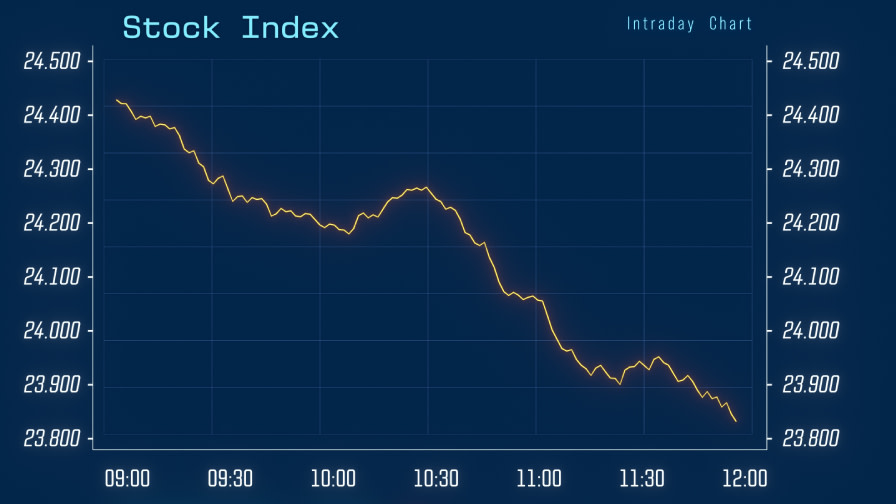
A recent study covering 170 years of financial journalism reveals that we are 97% likely in an AI financial bubble, and leaders should prepare for a crash.
Sure it can be useful. The question is; is it economicaly sustainable. If tokens actual cost is 10x what they are offered at now, how many will still buy them? Probably only where there is no viable alternative. Not everyone is recompiling GTA.
I also suspect societies will start understanding the cost of exposing all secrets to cloud hosted chat bots, with their attached foreign adversaries. That is also not sustainable.
local AI with solar panels and battery energy storage makes it much cheaper. In Germany the data center company Hetzner does this for all their servers and thus they are cheaper then big tech data centers.
Hopefully their cooling solutions are just as sustainable too.
They don’t have AI data centers and they have cheap/free energy. There would be no real benefit to evaporative cooling for them. Water costs money in Europe and normal data centers don’t require anywhere near as much power.
Yes
Bingo. This is the key question. How much are people willing to pay for this, I wager that for most people anything more that $0 is too much.
APIs that aren’t Anthropic/OpenAI are already dirt cheap. Even if their costs went up 10x, it would still likely match those bloated models and API costs.
I agree - it seems that centralized inference is more costly than localized one, which is pretty surprising - if you do not take into account the massive overbuild. I know from an acquaintance that they have replaced Claude usage around 80% by getting some inference hardware and doing things locally with GLM 5.3.
We could really do this on a smaller scale and it would be great thing, But Big Tech was very hungry after a long drought (the metaverse was one of the things they tried to get out of this rut), and therefor pushed this thing as hard as it could.
Actually centralized inference is far more efficient. It is the training that takes up most of the compute power. Imagine this, if you can run those model on your own, a data center can do the same with batching and use the time that your GPU would otherwise spent idling, processing more request.
So the economic of scale is still in full effect, it’s just that the measure used is wrong. It shouldn’t use token but power drawn to compute. That way a model with a smaller footprint would be MUCH MUCH MUCH cheaper.
The issue is the companies making the closed models need to make profit from the very compute intensive training hence they won’t ever make the pricing as a unit of power consumed.
I am not so sure about the economics of scale here. This would mean that the more compute you get, the cheaper things would become, but that does not fully apply here. Training costs are fixed. The hardware costs are fixed - expanding always costs the same. And the costs for inference itself rises linearly with the amount of compute (which practically equals energy), so there are no savings to be made by getting faster compute.
When we take that into account, a single piece of compute that can work without needing a lot of infrastructure around it (aka not a datacenter) can be just as efficient while providing inference as a whole-ass datacenter if both use the same amount of energy, while eliminating the whole “build something large to support it” thing.
Even if we would improve the efficiency of the hardware by 1000%, the same still holds true, unless you can get electricity and cooling for free as a datacenter. The difference in energy costs is practically the margin between what it costs me to run a local model and what it costs them. Unless this margin can cover the construction of a datacenter and the administrative overhead, this is not a business to make big money in.
Well, here is the thing. A compute idle is a compute wasted (same thing why a huge free RAM is a sign that you go way overboard OR the OS is not scheduling the resource efficiently). Even idling component sip power. Let’s say 5W. If you have 100s of GPU idling you got 500W just from idling. Meanwhile if you have 1 big GPU shared across people those 500W could be spent computing.
The power needed to compute also doesn’t always scale linearly. Batching is very effective because there is a fixed overhead for every inference that you pay. Batching can share that fixed overhead cost. Different neural network architecture can benefit greatly from different ways to run the inference.
Yes, the training cost is fixed. The issue is that every company is racing to be the best model owner. That’s why open weight is a godsend. Just to put into perspective, the ratio of inference vs training compute is around 10×. You need 10× as much compute to train than to run the model. 1/11th of a data center just to serve customer. Not to mention inference can use a much more efficient silicone accelerator that is not GPU (like NPU/TPU/other ASIC)
The first is the same with both local and remote interference. There’s not much monetary difference between local and remote with this factor.
I do not think that batching reduces power consumption that much - the real power draw is the inference itself. There might be a few percent that you can remove by optimizing overhead. The amount of hardware that is running in a datacenter to provide the necessary requirements for large scale inference is probably killing off that advantage. If i compare that with local inference which often just uses existing infrastructure that you need anyway like a small server farm for other work tools and the existing network, where you then add an inference server, I would say that things here are again pretty even locally and remote.
The training costs is something that simply disappears in the total costs. Yes, it is an intensive process, but if you have millions of parallel sessions running, those costs really become insignificant in the long run. It is the same hardware running these two things after all. Sooner or later the total runtime of the hardware under load for inference surpasses the same parameter for training. Training costs are only a factor if you keep training new ones and do not use them enough.
So in the end, the price difference is how much cheaper they can get electricity than others and how much their organization costs them in upkeep. No wonder they are pricey and still don’t have a positive margin.
Efficient use of silicon vs efficient use of energy
But energy is an ongoing cost so makes more sense to optimise, right?
We’re doing the same; GLM 5.3, the newer Qwen models etc are replacing Claude already for most of our cases.
Haven’t tested Claude recently, but honestly, GLM 5.4 doesn’t stand a chance against Gemini 4 Neon at the moment. Any truly hard debugging, Gemini will handle way better. GLM could probably do it eventually, but by then the token usage is so damn high it’s not funny. For easy things, 5.3 Flash is still the value king IMO
Looking forward to testing GLM 5.4 in our toolset if 5.3 was already capable of replacing Opus 4.6 (we had issues with newer Opus versions).
Local, self hosted AI
Thats the bleeding edge models, the energy cost for a token drops constantly.