Genetics, more muscle fibers per unit area than humans, lots of T, and constant foraging.
Leaves and stems are 10-20% protein by dry weight
Not to mention the fiber must be off the charts. Any fat’s not sticking around long enough to be absorbed.
Per calorie, Broccoli has as much protein as steak.
That’s kind of fascinating - though it’s only about 1/10th of the amount by weight - so something like 75g of protein would need ~300g of Steak or ~3kg of Broccoli (about 10 full heads of Broccoli).
For plant based proteins, you’re probably better off with beans.
Do you realize how much of my day would be spent eating and shitting in order to meet my macronutrient targets by consuming broccoli? I’d just be sitting around all day like some kind of gorilla.
deleted by creator
deleted by creator
No kidding? Is this true of other brassicacea?
Broccoli stands out a bit. Cabbage and cauliflower and kohlrabi and bok choy don’t have the same protein ratio, because other brassicas we eat as vegetables are generally higher in carbs, so that their protein per calorie is lower (with more calories from carbs rather than protein).
You just wanted to say, “brassicacea.”
Your just jealous you didn’t know that word well enough to use it yourself
That we, as homo sapiens, will never access because we do not have the gut microbiome necessary to break down and use.
No, I’m literally talking about the bioavailable protein for you, a human.
Don’t forget that Homo sapiens evolved as fructivorous apes eating stuff like broccoli and our omnivorous diet is a recent development. (The bacteria-dependent digestion you mentioned is for the cellulose in grass, not protein.)
Even though your broader point is correct that our ancestral lines and closest relatives (chimps, gorillas, other great apes) primarily eat plants, I think broccoli is a bad example of what our ancestors ate. Broccoli is the result of specialized human-driven artificial breeding after the rise of human agriculture, and has a higher protein ratio than even other brassicas, like the cabbage breeds that broccoli descends from.
True, but we cultivated broccoli to be sweeter, so I wouldn’t be surprised if vegetables used to have a higher protein/calorie ratio.
Skill issue
For broccoli? No, that’s actually a fairly bioavailable protein source, especially when cooked. Even compared to high protein plant sources like beans or lentils, broccoli’s protein is more bioavailable. It’s just there’s not that much of it, and the “protein per calorie” stat is kinda cherry picked from the fact that broccoli is low carb and low fat, rather than being really high in protein.
Either way, though, the gut microbiomes of herbivores are mainly adapted to draw out more useful carbohydrate, not more useful protein. Cellulose is so plentiful in nature that making use of all those glucose molecules is biologically rewarding.
Plant protein bioavailability is affected by a lot of factors, including whether the food has been chopped up, peeled, cooked, etc. Human chewing and guts (especially in modern humans) are pretty inefficient for extracting nutrients from food in the natural state because we have been cooking and processing food for millions of years.
So yeah. Cows have complicated guts for digesting cellulose and extracting amino acids from chloroplasts, and innate chewing behaviors that mechanically process grass into mush, but we have knives and fire to do more of that stuff outside of our bodies. And cattle pick and choose grasses (including high protein leafy legumes like clover or alfalfa) depending on their own needs, as well.
broccoli doesn’t look as calorie dense as steak though.
Awww shit guess it’s time for Bananamaxxing!
I’ve been beanmaxxing
Banana for scale
https://www.bbc.co.uk/news/magazine-34225517
But for a healthy person, “it would be impossible to overdose on bananas,” says Collins. "You would probably need around 400 bananas a day to build up the kind of potassium levels that would cause your heart to stop beating… Bananas are not dangerous - and in fact they are, and always have been, very good for you."
Adults should consume about 3,500mg of potassium per day, according to the UK’s National Health Service. The average banana, weighing 125g, contains 450mg of potassium, meaning a healthy person can consume at least seven-and-half bananas before reaching the recommended level.
There are some people who should steer clear of foods that are high in potassium though, warns Collins - those with kidney disease.
“These patients have a very low kidney function which can potentially see a build-up of harmful potassium levels in their blood stream because they can’t get rid of the mineral when they pass urine,” she says. “So in theory it is possible for someone with kidney disease to die of a high blood potassium level if they decided to consume lots of different food types rich in the mineral.”
She once had a patient on dialysis who had a heart attack after eating too many tomatoes - another fruit rich in potassium. His kidneys had already stopped working so he was unable to get rid of the excess.
https://en.wikipedia.org/wiki/Hyperkalemia
Hyperkalemia is rare among those who are otherwise healthy.
Banana Island time 🍌
They have a long hind gut with specialized bacteria to break down cellulose, so they get way more protien from plants than humans. Horses use a similar trick.
They also don’t eat bananas primarily in the wild instead eating really abundant but nutritionally dilute foods like bamboo, thus the crazy efficient guts.
They also don’t have myostatin which is a way for our bodies to reduce muscles when we can’t get enough to eat. We get skinny and weak while a gorilla just straight up dies. OTOH when a gorilla builds muscle they never lose it.
Although that comes down to how we don’t eat the equivalent of grass. Even if a gorilla had myostatin if it couldn’t find enough bamboo shoots to eat they’re dead anyways.
Can we put one of those in a human and see what happens?
There was an old lady who swallowed a horse…
She’s dead, of courseI remember seeing that video back in the Napster days.
You can get huge muscles on a vegan diet.


It’s true though
Why are people down voting you
Maybe people suspect it’s not just a vegan diet but also steroids n shit. Don’t know if steroids are vegan though.
That is a solid philosophical question man lol
Reminds me of the Rich Piana natty vegan memes

Guys in that photo are significantly more believable.
Only one downvote that I can see, although I don’t know if anyone banned from My server is downvoting. People banned from My server tend to be right-wing reactionaries, so that would explain it. To reactionaries (and indeed most people), facts don’t matter as much as which “side” they support. Support vegan bodybuilders, and you’re implicitly attacking meat-eating ideology. So people downvote because their meat ideology feels threatened.
You’re resting at a reasonable number now I just saw you at zero earlier lol
I was like “they’re right though,”
Who do you think is right? Grail? Or the people downvoting Grail’s comment?
Grail you can absolutely be shredded on a vegan diet
Anti vegan people aren’t necessarily the best informed about the actual science of nutrition and fitness
I think it was ‘Grail is right’ because it’s in the first comment
Grail
Short guy in the last photo is Derek Simnett, Canadian vegan who has a youtube channel with a lot of fantastic easy vegan recipes and guides that really helped me not be a total disaster when I went vegan. Highly recommend.
Ooh, yes please!
More power to them. I make my choice to eat things that have feelings.
Other comments are about how gorillas have guts adapted for digesting lots of vegetation. And that’s true. But at its core, it’s just that gorillas actually do eat a ton of protein.
They eat like 30 kg of food per day for 5000 calories, about 25% of which is from protein. That’s more than 300 grams of protein per day.
Nothing they eat is super calorie dense, but the lack of density also means they need to eat all day. And as it turns out, the leaves they eat tend to be pretty high in protein.
Weird that every time you see a gorilla though, he’s just sitting there looking like a jacked freaking gorilla, not doing a dang thing.
Yeah like not working out or anything. I can sit around eating all day too, but my muscles just wither away.
Their muscles do not wither away, they stay they do not have that mechanism. They wound simply die when there is a food shortage while humans adapt.
Realistically I would say they don’t eat just bananas.
But I’m also wondering: How many bananas a day do you eat right now? Maybe the key is a banana heavy diet.
Potassiumaxxxing
Remember to balance it with low sodium. Otherwise you’ll have too many electrolytes
Trust me, do not do this. You will regret it. 2 bananas per day is enough
People have a muscle mass regulating hormone that prevents us from developing huge muscles easily.
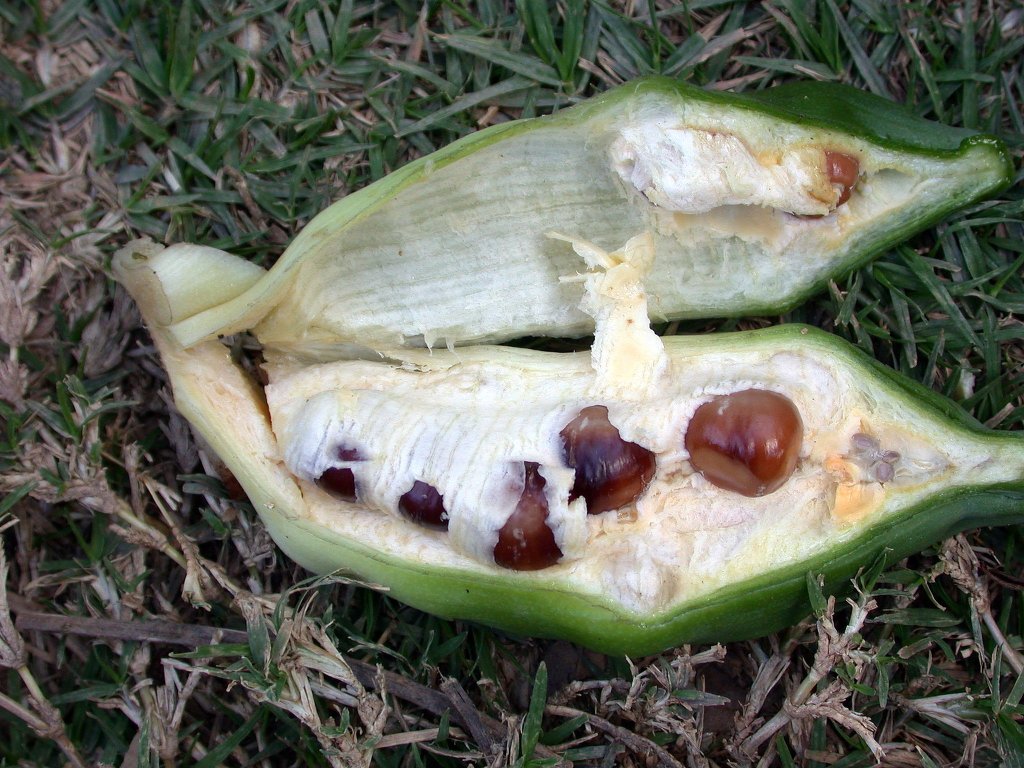
Also gorillas don’t eat bananas in the wild, true banana species all come from Asia. The closest they could get is Ensete ventricosum.
Apparently looks like this.
Wonder what it tastes like.
Banana…peel.
I meen there’s the inside, around those big seeds :)
Cows and Kangaroos are pretty jacked too. Wouldn’t want their palates or diets though.
Cows and kangaroos get their protein from gut bacteria, bit of a cheat code
We all get our protein from gut bacteria, or at least thanks to gut bacteria. In nutrition, “protein” refers to the collection of the proteins (amino-acid chain macromolecules) that we can digest. The rest of the proteins (the proteins we can not digest) are called “fiber” in nutrition.
Foregut fermenters turn all of protein ingested, in addition to ingested nitrogen like urea, into base blocks like ammonia and then back into bacterial proteins that have much better amino acids. They are creating the amino acids they need, roughly in the quantities needed. In humans this does not happen in any meaningful way - we must eat the amino acids we need.
Well, that is cheating.
Pure herbivores’ main advantage over us is their ability (through their gut bacteria) to make use of all the carbohydrates in cellulose.
For protein, cattle and other herbivores do have a higher ability to extract usable amino acids from plant sources within the actual structural matrix of how they exist naturally in the plant, but we humans deal with that by processing and cooking our food instead of eating raw plants. Herbivores also have to do a lot more mechanical processing, especially chewing, to break down the structure of the plant matter for their guts to process.
The fact is, herbivores have to eat so much more food than meat eating animals do. Gorillas eat 30 kg of food per day. Elephants eat 75-150 kg of food per day.
And in captivity, fruit-eating primates need protein supplements, to make up for the fact that human-bred fruit tends to be much higher in sugar and lower in protein (per calorie, at least) than what these animals eat in the wild, especially when you account for insect parts that are common in wild fruit.

Bro did not skip neck day.
His upper trapezius is so jacked, it could almost double as an umbrella shielding him from the rain & sun.
They have huge guts. We have tiny guts.
Speak for yourself.
Built different.
You ever see the gut of a gorilla? They have much better mechanisms and microbiota to get all their nutrients from plants than we could dream of.
Plus they build muscle by all the other things people mention, like genetics and weight lifting (their own mass).
Could we get a a fecal transplant from a gorilla and then get all muscley
Time for a new superhero backstory
They’re also swinging from vines, too.
Also, their testosterone levels are through the roof
Bamboo bro